
Short Film Review: Call Me Crazy (2026) – Thoughtful and Emotional!
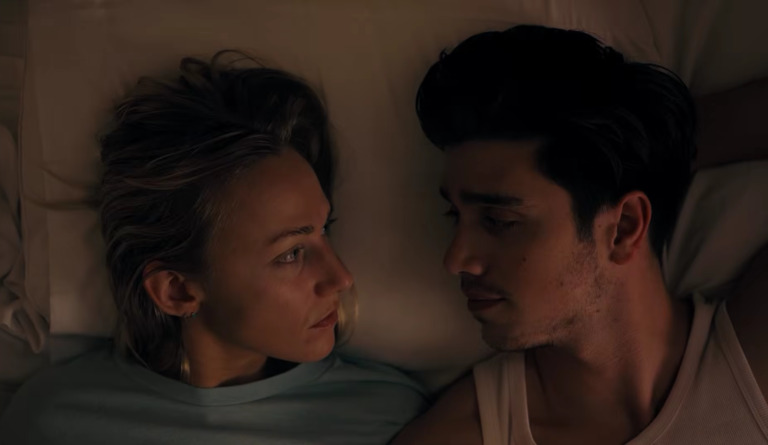
Call Me Crazy begins almost deceptively lightly, with a sense of awkward comedy and unexpected chemistry, before gradually peeling back its layers to reveal something much heavier. Olivia Ormond’s short is ultimately less interested in presenting a conventional unexpected romantic encounter than in exploring what happens when someone is struggling to make sense of their own reality, particularly after spending so long being told that what they feel may not be real, leaving a lasting emotional impact.
Short Film Review: Lunch Box (2026) – Simple, Cheerful and Nostalgic!
From the beginning, Emi comes across as confusing, unpredictable and almost randomly reactive, but the film slowly gives context to that behavior. What initially seems like eccentricity begins to make sense once we understand what she has been dealing with medically. There is something deeply unsettling about believing you have a serious problem, living with the fear and physical reality of it, and then being told that the problem cannot be found or validated. Even when the outside world gives you an answer, that doesn’t necessarily make your experience disappear overnight. Call Me Crazy captures that psychological disconnect quite effectively.
The screenplay is perhaps the film’s strongest element. The dialogue can be funny, awkward, fragmented and deeply uncomfortable, sometimes within the same conversation. Rather than explaining everything about Emi and Ben, the writing allows their emotional states to emerge through strange exchanges, pauses and seemingly disconnected thoughts. What initially feels flirtatious gradually becomes something much sadder, a person searching for familiarity, affection and validation while carrying emotional wounds.
The performances complement that writing well. Both Olivia Ormond and David Kopriva deliver believable, intimate performances, but Ormond particularly stands out as Emi. She captures someone who is clearly struggling internally without turning the character into an easy-to-understand victim. There is confusion, vulnerability, humor and emotional instability in her performance, making it easier to understand why her behavior can appear strange from the outside while still feeling completely logical from within her perspective.
Andrew Parkerton’s cinematography is another highlight. The film makes strong use of its motel setting, lighting and nighttime atmosphere, creating an appropriately isolated environment for these two people to open up. Most striking are the underwater sequences, which give a visual representation to the suffocating, almost surreal experience taking place inside Emi’s mind and body.
Ultimately, Call Me Crazy is a thoughtful short about how difficult it can be to live with something nobody else can see. It starts with humor and an unusual encounter, gradually descends into deeper trauma and emotional vulnerability, and leaves us on a rather bitter note. Yet that tonal journey feels purposeful. The film’s biggest strength is its understanding that sometimes people don’t need someone to completely solve or explain their pain, they simply need someone to believe that it is real.
‘Call Me Crazy (Short 2026)’ Rating – 4/5

- Hear Me (2026) Review: An Atmospheric Horror! - October 15, 2026
- Heart of the Beast Review: Friendship Against All Odds! - October 15, 2026
- One Eye Open Review: An Enjoyable Supernatural Horror! - October 14, 2026