
Wet Paper Bag Review: Layered and Captivating!
Wet Paper Bag initially presents itself as a fairly straightforward missing-person mystery wrapped inside a psychological thriller. Michelle Connors, a former investigative journalist turned podcast host, enters the isolated a Wellness Center with her partner and producer Reilly, posing as a couple seeking treatment while secretly trying to find her missing sister. That setup immediately gives the film a clear objective, and for much of the first act, I was watching it expecting the mystery to gradually unravel. But as the film progresses, it becomes clear that the missing-person storyline is really a doorway into something much more psychologically unsettling.
Related – “Shaken and Stirred” Review: A Documentary Beyond Flipping Bottles!
What I appreciated most about the film is the way it explores manipulation, brainwashing, submission and the gradual stripping away of personal agency. I went into Wet Paper Bag knowing very little about where it was headed, so the Haberman Wellness Center genuinely felt uncomfortable from the moment Michelle and Reilly entered it. There is something inherently wrong about the environment. The center is presented as a place supposedly designed to help people confront their emotional problems, using psychedelic treatments, but the treatment gradually starts looking less like healing and more like psychological control.
The film communicates that idea particularly well through its characters rather than simply explaining it through exposition. Janus “Jan” Haberman becomes especially important here because he feels like the odd one out within this strange environment and consequently becomes one of the clearest representations of what happens when someone’s autonomy is gradually taken away. The interactions between the characters make the manipulation feel increasingly uncomfortable because the people inside these walls aren’t simply being physically trapped; their understanding of themselves is being challenged. That fits particularly well with the film’s larger idea that sustained trauma and manipulation can weaken the psychological structures people depend upon.
The mystery and thriller elements themselves are handled relatively well, although this is where I felt the film becomes less consistent. There is a genuinely nail-biting tension running through much of the movie, and the contained setting works in its favor. However, the actual search for Michelle’s sister eventually feels less important than the characters’ psychological descent and the larger conflict over control. Once the film moves increasingly toward madness, particularly in the third act, the narrative becomes more chaotic.
Don Haberman, the center’s charismatic but terrifying leader, also becomes increasingly unhinged. I understood that his traumatic past and emotional instability were meant to contribute to his behavior, but I felt his villainous side could have been developed with more restraint and psychological precision. His volatility sometimes becomes more exaggerated than genuinely frightening, which takes away some of the tension the earlier portions had carefully established.
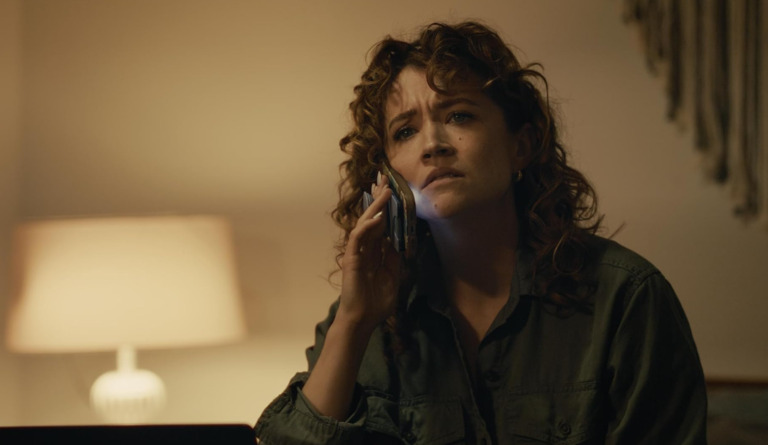
Moving on to the performances. Nicole Weber does particularly well as Michelle, giving the character enough emotional depth beyond simply being a woman searching for her missing sister. Her troubled past, strained relationship with her sister and increasingly rocky relationship with Reilly all contribute to someone who already carries considerable emotional baggage before entering the wellness center. That makes her psychological struggle more meaningful. There are also interesting parallels between Michelle and Jan, with both characters representing different sides of vulnerability, control and the consequences of being psychologically manipulated.
Furthermore, Carter Monahan handles Jan effectively, while Mike Bredon gets several standout moments as Don, particularly through his expressions and shifting demeanor. The rest of the ensemble fits naturally into the film’s deliberately uncomfortable environment.
Technically, Wet Paper Bag features a polished visual identity and strong technical execution. Jud Nichols and Jarrod Crooks’ cinematography and production design effectively turn the wellness center’s isolated location into a believable yet increasingly sinister environment. Complementing this, Steve Gernes’ background score and restrained sound design avoid conventional horror tropes, using surreal audio layers and tense, quiet moments to build a subdued, psychological unease where something always feels slightly off.
Ultimately, Wet Paper Bag worked best for me when it focused on what happens inside people’s minds rather than simply asking what happened to the missing sister. Its ideas about manipulation, agency, fear and breaking destructive patterns give the story considerably more substance than its initial mystery setup suggests. The closing metaphor of a wet paper bag captures that perfectly: something that appears to have structure can become fragile when exposed to enough pressure.
The film’s final thoughts about choosing who we want to be, rather than remaining trapped by familiar patterns, give its psychological descent a thematic purpose. I had some reservations about the increasingly chaotic third act and Don’s characterization, but the performances, atmosphere, technical execution and underlying themes make this film a worthwhile psychological thriller to watch. You can now rent and stream ‘Wet Paper Bag’ on all major platforms — click here. Also, follow the movie on Instagram for more updates.
‘Wet Paper Bag (2026)’ Rating – 3.75/5

- Wet Paper Bag Review: Layered and Captivating! - September 8, 2026
- Shaken and Stirred Review: A Documentary Beyond Flipping Bottles! - September 2, 2026
- Love Loaded Review: Unique, Confident and Intriguing! - September 1, 2026