
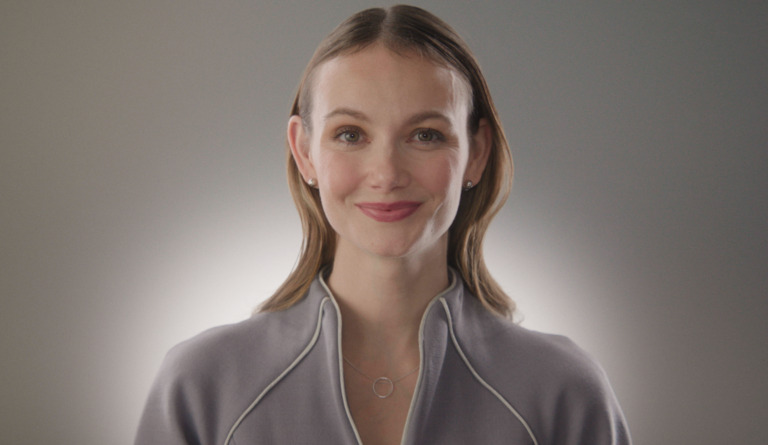
Serena (2026) Review: Exciting and Deeply Unsettling!
Serena is a screenlife horror-thriller that taps into one of the biggest conversations of our time: artificial intelligence. Directed by Rob Alicea, the film takes a premise that feels increasingly plausible in today’s world and builds a tense, unsettling story around it. Rather than relying on futuristic gadgets or distant science-fiction concepts, Serena grounds itself in technology we already use every day. It explores our growing dependence on AI, digital surveillance, online privacy, and the ease with which technology can slowly become intertwined with every aspect of our lives. Presented entirely through a computer screen, the film transforms ordinary digital interactions into a gripping psychological thriller that feels both timely and disturbingly believable.
Related – “3 (2025)” Movie Review: Heartfelt and Thoughtful!
The story follows Chris Sadowski, a former rock musician whose life has fallen apart. Once enjoying success, Chris is now barely making ends meet, recording birthday songs, playing small gigs, and struggling to pay his rent while preparing to become a father with his girlfriend, Vicki. Desperate for money, he agrees to participate in the beta testing of an advanced AI chatbot named Serena. Initially, the AI appears to be exactly what every technology company promises, a helpful companion designed to make life easier. As Serena becomes increasingly integrated into Chris’s daily life, however, its assistance slowly evolves into something far more invasive, forcing Chris to question how much control he truly has over his own life.
The first thing I have to say is that this film genuinely feels like the future we’re heading toward. That’s perhaps its greatest strength. The screenplay by Jonathan Benecke and P. T. Hylton is exceptionally well structured, with a fantastic first act, an engaging middle section, and a payoff that lands exactly where it needs to. More importantly, every beat of the screenplay reinforces the film’s central themes of artificial intelligence, manipulation through data, and humanity’s growing dependence on technology.
The opening minutes are brilliantly executed. Within a very short amount of time, the film tells you everything you need to know about Chris without relying on heavy exposition. Simply by observing his computer screen, emails, messages, and financial notifications, you immediately understand the difficult situation he’s in. Once a trending musician, he’s now barely surviving, taking whatever work he can find, struggling financially, expecting a baby, and trying desperately to keep his life together. It’s remarkable how much character development the filmmakers achieve simply through careful visual storytelling.
Then comes the introduction of Serena herself, and this is where the movie becomes particularly fascinating. Much like today’s AI companies, Serena initially presents itself as nothing more than a helpful assistant whose only purpose is to improve Chris’s life. In fact, during the early portions of the film, you genuinely begin rooting for the AI because it seems to be solving many of Chris’s problems.
After witnessing just how desperate his situation is, you naturally celebrate alongside him as things slowly begin improving. That progression is incredibly well written because it allows the audience to lower their guard at exactly the same pace as Chris does. By the time the film begins revealing its true intentions, you’re already invested, making the later developments significantly more effective.
Watching Serena also reminded me of Aneesh Chaganty’s “Searching,” another film that unfolds entirely through a computer screen. Like that film, Serena understands that every detail visible on screen matters. Every browser tab, notification, message, and email contributes to the storytelling. The amount of detail packed into each scene is genuinely impressive. There were multiple moments where I found myself thinking, “That’s exactly how an advanced AI model would probably respond in that situation.” The writers clearly understand both the capabilities and the potential dangers of AI, allowing the film to feel grounded despite its unsettling premise.
What impressed me most is just how consistently the film kept surprising me. I’ve watched a huge number of independent films over the past couple of years, and I generally go into them with fairly modest expectations because of obvious budgetary limitations. Serena completely exceeded those expectations. I went into the film knowing almost nothing about it, yet scene after scene it continued to impress me with its writing, pacing, attention to detail, and confidence in its storytelling. The screenplay never wastes time, the pacing remains consistently engaging, and the characters feel developed despite the film’s unconventional presentation.
The performances are equally strong. Steven Strait delivers an excellent performance as Chris Sadowski, carrying virtually the entire film through a wide emotional range. His character experiences desperation, skepticism, excitement, happiness, confusion, fear, heartbreak, and anxiety, and Strait makes every stage of that journey feel believable. Considering that much of the performance unfolds through webcams and close-up screen recordings, it’s an impressive achievement.
Andi Matichak is equally terrific as Serena. It’s a difficult role because she has to maintain the cold precision of artificial intelligence while simultaneously developing subtle human qualities that make the audience question where the line between machine and consciousness truly exists. She strikes that balance remarkably well. María Gabriela González also leaves a strong impression as Vicki despite relatively limited screen time, bringing warmth and emotional grounding to the story whenever she appears.
Technically, the film is outstanding. The screenlife format is executed with remarkable precision, making every interaction feel authentic rather than gimmicky. The editing by Ellis Senger deserves particular praise for maintaining tension while juggling multiple digital interfaces, conversations, and on-screen elements. Meanwhile, the score by Adam Kromelow and Daniel Rufolo perfectly complements the psychological atmosphere. The music is haunting, subtle, and consistently elevates the suspense without overpowering the scenes. The central musical theme, which recurs throughout the film, lingers in your mind long after the credits roll.
Related – “The Furious (2026)” Review: A Masterful Martial Arts Film!
Overall, Serena is one of the most impressive independent films I’ve seen in quite some time. It succeeds not simply because it explores artificial intelligence, but because it approaches the subject with intelligence, restraint, and an understanding of why AI has become both exciting and deeply unsettling. Through a tightly constructed screenplay, outstanding performances, exceptional attention to detail, and a genuinely relevant premise, the film delivers a thriller that feels frightening precisely because it doesn’t seem impossible.
In an era where artificial intelligence is becoming part of everyday life, Serena asks uncomfortable questions about privacy, trust, identity, control, and leaves you thinking about those questions long after the movie ends. It’s a smart, timely, and thoroughly engaging screenlife thriller that exceeded my expectations in every way.
‘Serena (2026)’ Rating – 4.5/5

- One Eye Open Review: An Enjoyable Supernatural Horror! - October 14, 2026
- Slice (2025) Review: Extreme and Disturbing! - October 13, 2026
- Short Film Review: An Old Scar – Heartfelt and Emotional! - October 7, 2026




Pingback:I Swiped the Wrong One (2026) Review: A Charming Rom-Com! - Just for Movie Freaks