
The Midnight Ride of Jonathan Luna Review: Compelling and Informative!
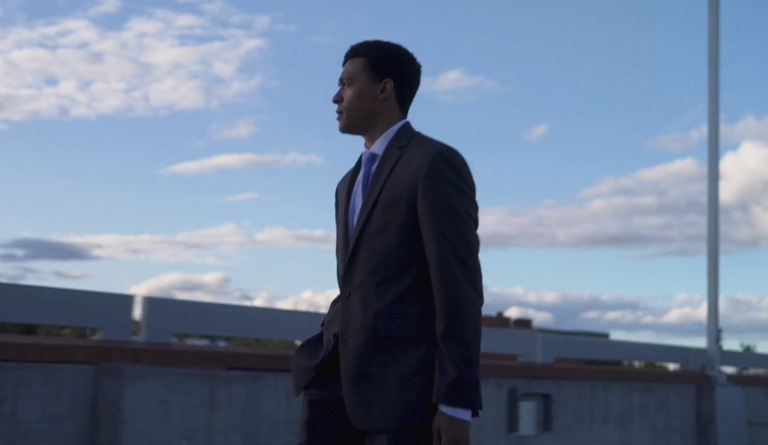
The story of Jonathan Luna is as disturbing as it is baffling, raising serious questions about the circumstances surrounding the death of a young federal prosecutor. Found murdered in Pennsylvania after an unusual late-night journey across state lines, Luna’s case has remained shrouded in controversy for more than two decades. In The Midnight Ride of Jonathan Luna, director Dan Cohen revisits the case, examining the man behind the headlines, the events leading up to his death and the questions surrounding the investigation.
Also Read – “Cinnamon (2026)” Movie Review: Stylised and Unapologetic!
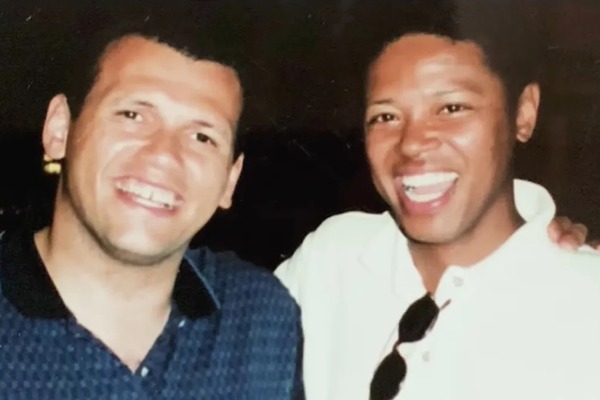
The film’s greatest achievement is the way it establishes this background before taking us deeper into the mystery. We learn about Luna’s childhood in the South Bronx, growing up in the Patterson Houses under difficult circumstances, and the determination that eventually took him to Fordham University and law school. What I particularly liked is that the documentary doesn’t present his professional success as just a rags-to-riches story. Through personal accounts, it explores his personality, his relationships, his sense of responsibility and the principles he appeared to stand for. We get a much better understanding of the person behind the headlines: a dedicated public servant, a family man and someone whose friends remembered him with genuine affection.
And once that portrait is established, the documentary takes us into the circumstances surrounding his death. In December 2003, Luna was working on a high-stakes drug and murder prosecution and preparing a plea agreement that was expected to be presented the following morning. He left his Baltimore courthouse office late at night, embarked on an unusual journey across several states and was eventually found dead in a creek in Lancaster County, PA. The nature of his injuries and the unexplained details of his final journey immediately raise questions. What happened during those hours? Could his professional circumstances have played a role? And why did the investigation become surrounded by controversy? These are the questions the doc examines in depth.
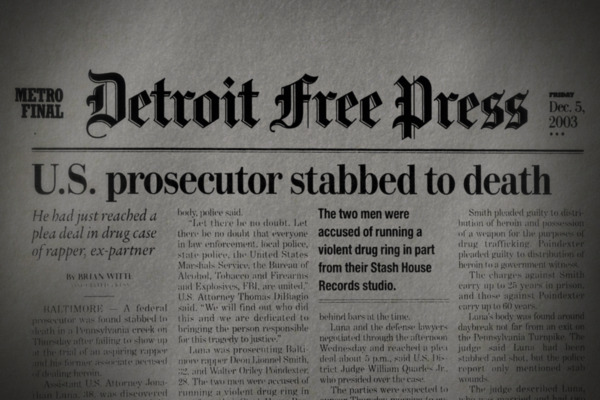
I appreciated how much history and context Dan Cohen and investigative journalist William Keisling bring into the narrative. The film doesn’t simply jump between theories about what might have happened. It takes us through the events leading up to that night, the people involved in Luna’s professional life and the controversial trial he was handling and the different developments that shaped the investigation afterwards.
The interviews and testimonials are particularly valuable. We hear from people who knew Luna personally, including childhood friends, former classmates and professional colleagues, alongside legal and law-enforcement figures. Their recollections provide different perspectives on his character and the circumstances surrounding the case. The personal accounts are especially effective because they bring an emotional dimension to what could otherwise have become a rather procedural true-crime investigation. Archival news footage, courtroom reenactments and visual reconstructions also help organise the extensive information.
Naturally, the documentary also spends considerable time examining allegations of institutional misconduct, questionable investigative decisions and the narrative that emerged after Luna’s death. Early reports and anonymous law-enforcement accounts encouraged speculation about his personal finances and private life, while the possibility of suicide became a major part of the public discussion.
The filmmakers challenge that narrative and raise questions about whether the attention given to Luna’s personal circumstances distracted from the circumstances of his death. The possible connection between his prosecution and what happened to him is another important avenue explored here. These are serious allegations, and the film’s arguments should be understood as its investigative position rather than a judicial finding. Nevertheless, the questions it raises make the documentary compelling.
I also want to acknowledge the passion behind this project. You can tell that Cohen has invested considerable time and personal commitment into bringing this story to a wider audience, working alongside Keisling, whose investigative work forms a major foundation for the film. There is an unmistakable indie-film quality to the production. It doesn’t have the glossy presentation of a big-budget streaming true-crime series. It feels like a project driven by the need to revisit a case that its makers believe deserves far more attention.
Ultimately, The Midnight Ride of Jonathan Luna is a compelling investigative documentary that succeeds in making us care about the victim before asking us to question the circumstances of his death. Its strongest element is the human portrait of Luna, followed by the detailed reconstruction of the events, the testimonials and the troubling questions surrounding the investigation.
It doesn’t deliver a definitive answer to who killed him, and some of its allegations remain matters for further scrutiny. But that is precisely why the story deserves attention. It is a passionate and informative documentary that leaves you wanting answers. Stay up to date with the latest screening announcements and listings for ‘The Midnight Ride of Jonathan Luna’ by visiting the documentary’s website.
‘The Midnight Ride of Jonathan Luna’ Rating – 4/5

- The Midnight Ride of Jonathan Luna Review: Compelling and Informative! - November 19, 2026
- Cinnamon Review: Stylised and Unapologetic! - November 18, 2026
- Demon Dancer: Sua/Nara Review – Interesting and Stylistic! - November 16, 2026