
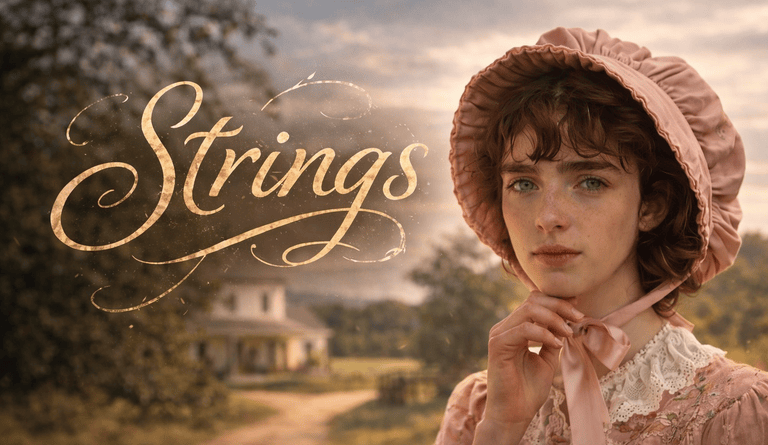
Strings (2026) Review: A Definite Improvement in Hooroo Jackson’s AI Film Universe!
Strings marks an intriguing step forward for filmmaker Hooroo Jackson, especially when placed alongside his earlier experiments with AI-generated cinema. The film positions itself not only as a period drama but also as a technological milestone, attempting to cross what Jackson calls the “passing threshold,” where AI-generated performances become indistinguishable from real actors.
Set against the backdrop of the American South, the film follows a secret collaboration between a gifted Black puppeteer and a plantation owner’s daughter, blending romance, art, and buried family history. On paper, it’s an ambitious premise, and the film clearly aims to push both storytelling and technology into new territory.
One of the most noticeable improvements in Strings lies in the visual side of the production. Compared to Jackson’s previous projects, the AI-generated characters feel far more refined. Facial features appear more natural, expressions land more convincingly, and the overall photorealistic quality is a clear step forward. The lighting design and the sense of depth within each frame also feel more deliberate and polished. Scenes have a stronger visual texture, and the environments feel more cohesive than in earlier attempts.
Watching the film, you can almost sense the direction this technology is heading. If this is where AI-generated cinema is today, it’s easy to imagine that future projects will push the realism even further. In that sense, Strings feels less like a final destination and more like a glimpse of where filmmaking might be going.
That said, some of the same issues that appeared in Jackson’s earlier films still linger here. The editing style can feel choppy, with quick transitions that jump rapidly from one scene to the next. These abrupt shifts occasionally break the flow of the narrative and make it harder to stay fully immersed in the story. Instead of letting moments breathe, the film sometimes moves too quickly, which can disrupt the my concentration.
It’s not a deal-breaker, but it’s noticeable enough that it pulls you out of the experience at times. As the technology behind AI filmmaking continues to evolve, this is an area where refinement could make a big difference, particularly in maintaining emotional continuity between scenes.
As for the story itself, it’s a fairly decent effort and an interesting shift in genre for Jackson. The period setting and the central relationship between the puppeteer and Nellie give the film a dramatic core that works well enough to keep things engaging. While the narrative may not always feel deeply layered, it still manages to deliver a thoughtful premise about art, truth, and forbidden connections.
Overall, Strings may not be perfect, but it stands as a meaningful step in the evolution of AI-driven filmmaking. With improved visuals, a different storytelling approach, and an ambitious technical goal, the film shows clear progress from Jackson’s earlier work. It’s a fascinating experiment that hints at the future of cinema, even if a few technical growing pains are still part of the journey.
‘Strings (2026)’ Rating – 3/5

- Strings (2026) Review: A Definite Improvement in Hooroo Jackson’s AI Film Universe! - March 14, 2026
- Crime 101 Review: A Well-Crafted Crime Thriller! - March 13, 2026
- Air Shift Review: Light, Genre-Inflected Entertainment! - March 2, 2026